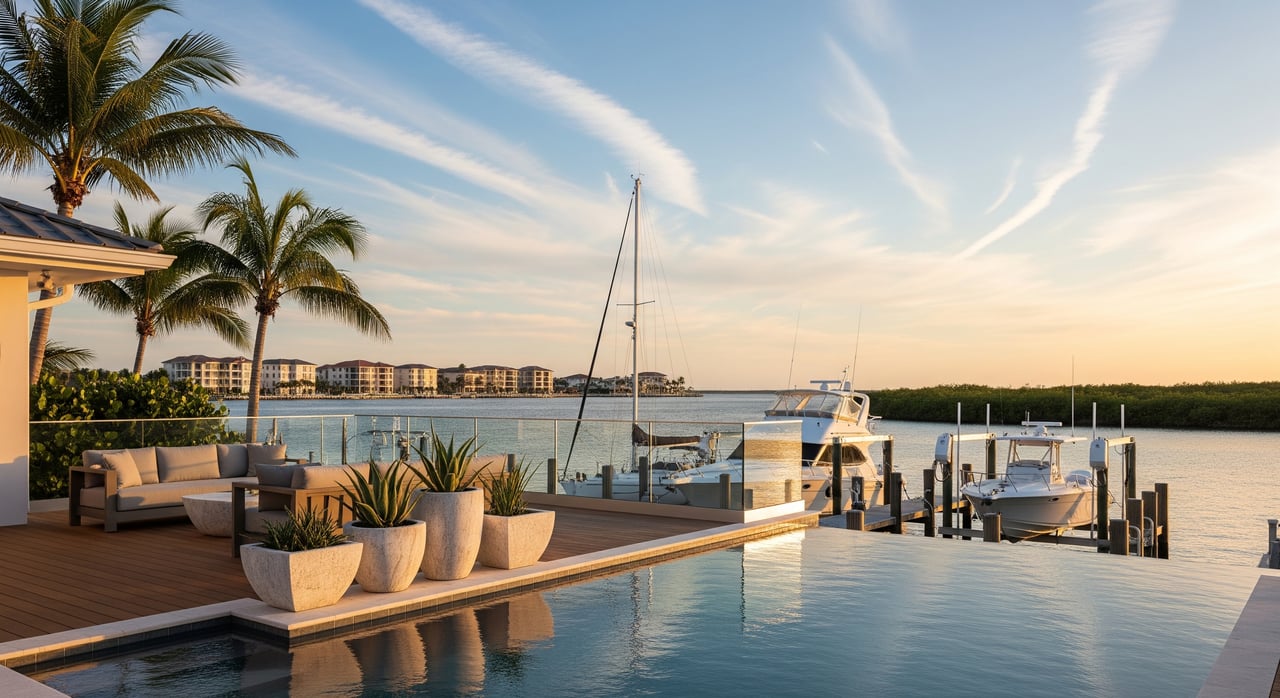
Coffee over the Caloosahatchee or sunsets on a quiet canal? If you want life on the water in Fort Myers, choosing between a waterfront condo and a single‑family home is the first big decision. Each option delivers a different mix of maintenance, insurance, boating access, and lifestyle. In this guide, you’ll compare both paths, learn the rules that matter on the coast, and get a practical checklist to shop with confidence. Let’s dive in.
Fort Myers waterfront at a glance
Fort Myers sits along the Caloosahatchee River and San Carlos Bay, with quick reach to Estero Bay and the Gulf of Mexico. You’ll find a range of waterfront settings: broad riverfront views, tidal bayfront and estuary edges, and canal systems that offer protected dockage and boating access. Gulf‑front options are on nearby barrier islands and carry more exposure to surf and storm surge.
Waterfront is a niche market here. Prices, insurance, and upkeep tend to be higher than inland properties, and micro‑markets vary by neighborhood, water depth, and storm exposure. Many buyers are relocators from colder climates, downsizers seeking low‑maintenance living, or second‑home investors planning seasonal use. Your best fit depends on how you want to live and boat.
Condo vs home: how they differ
Maintenance and control
- Condos
- The association usually handles exterior building maintenance, common landscaping, pools, and shared amenities through HOA dues.
- You cover your interior finishes and contents. Rules often limit exterior changes, pet policies, and how boats are stored or docked.
- Benefit: fewer day‑to‑day tasks and a maintenance‑light lifestyle.
- Single‑family homes
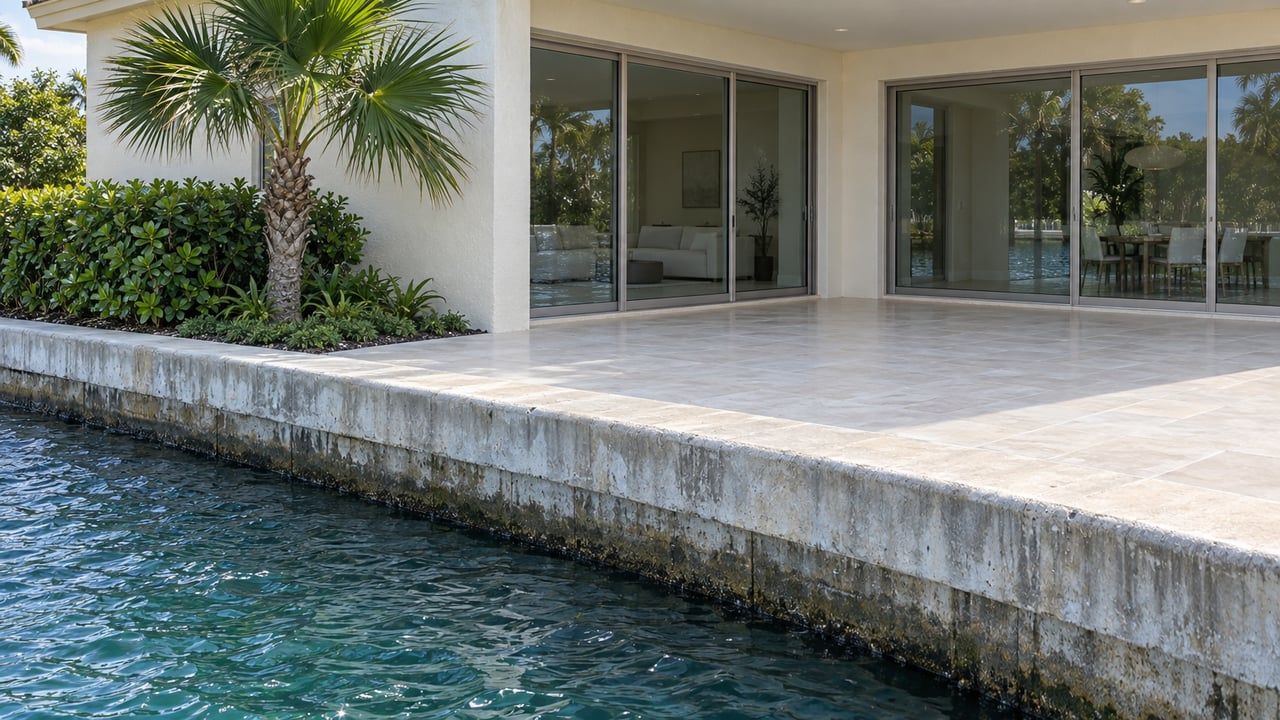
- You’re responsible for the roof, exterior, landscaping, pool, driveway, and especially the seawall and dock.
- You control improvements and timelines, subject to permits and local regulations.
- Benefit: full control and privacy, with the tradeoff of hands‑on upkeep.
Insurance and risk
- Condos
- Unit owners typically carry an HO‑6 policy for interiors and contents, plus flood insurance if required. The building’s master policy covers exteriors and common areas. Always review what the master policy includes.
- Single‑family homes
- Expect an HO‑3 policy for the dwelling, contents, and liability, plus flood insurance if in a FEMA flood zone. Coastal homes often have higher wind/hurricane deductibles.
- Availability and pricing can vary on the coast. Citizens Property Insurance serves as a backstop when private options are limited. Get quotes early in your search.
Amenities and services
- Condos
- Pools, fitness centers, clubhouses, covered parking, elevators, security or gates, on‑site management, and sometimes shared marina slips are common.
- These conveniences are bundled in HOA dues, which can feel predictable if reserves are healthy.
- Single‑family homes
- Amenities are private and under your control: your dock, your pool, your yard. Neighborhoods may offer shared facilities, but it varies widely.
Privacy and flexibility
- Condos
- You share walls and common spaces, and association rules shape rentals, exterior changes, and noise standards.
- Single‑family homes
- You gain more separation from neighbors and greater freedom to personalize, within local permitting rules.
Layouts and accessibility
- Condos
- Often single‑level with elevators, which is excellent for downsizers and anyone seeking easy access.
- Single‑family homes
- Many are one‑story ranch styles, but some waterfront homes are elevated to meet floodplain codes. You typically get a garage, more storage, and space for vehicles or trailers.
Boating and dock access
- Condos
- Some offer community marina slips, shared docks, or limited on‑site docking. Slip size, depth, and wait lists vary, and rules may limit lift installs or guest use.
- Single‑family homes
- Private docks and lifts are common on canals and riverfront lots. You control your boat and access, along with dock maintenance costs and permitting.
Views and elevation
- Condos
- Higher floors can deliver sweeping river or bay views without the need to elevate your residence.
- Single‑family homes
- Views depend on lot elevation, vegetation, and neighbors. You may manage landscaping or shoreline protection to maintain sightlines.
Cost and risk factors to check early
- HOA dues vs. private upkeep
- Compare predictable HOA dues and reserves in a condo to the variable costs of a private seawall, dock, landscaping, and pool on a single‑family home.
- Insurance and flood maps
- Many waterfront parcels fall inside FEMA Special Flood Hazard Areas. Confirm the property’s flood zone and obtain quotes for homeowners and flood insurance.
- Property taxes and assessments
- Waterfront often carries higher assessed values. Ask about any special assessments for seawalls, drainage, or community projects.
- Capital projects and reserves (condos)
- Review the budget, reserves, and recent meeting minutes to gauge upcoming repairs or assessments.
Rules, permits, and the coastal environment
- Flood zones and elevation
- Check the FEMA Flood Insurance Rate Map for each property and request an Elevation Certificate when available to understand base flood elevation and insurance implications.
- Seawalls, docks, and permitting
- Construction, repair, and replacement of seawalls, docks, lifts, rip‑rap, and mangrove trimming require permits. Authorities can include Lee County or the City of Fort Myers, the Florida Department of Environmental Protection, and sometimes the U.S. Army Corps of Engineers.
- Hurricanes, surge, and wind
- Verify building code compliance, impact windows or shutters, roof bracing, and other wind‑mitigation features that may affect safety and insurance.
- Short‑term rentals
- Condominium associations frequently limit short‑term rentals. Single‑family neighborhoods can also have rules. City and county ordinances vary across Fort Myers, Fort Myers Beach, Sanibel, and Captiva. Confirm both HOA and local government requirements if rentals matter to you.
- Environmental protections
- Estuaries and mangroves are protected habitats. Expect rules on shoreline alterations to protect water quality and fisheries.
Lifestyle fit: quick scenarios
- You want low maintenance and an easy lock‑and‑leave setup
- A waterfront condo with single‑level living, elevators, and on‑site services can be a better match.
- You want private control over your boat
- A single‑family home with a private dock and lift usually offers the most flexibility. A condo with a deeded slip can also work if it fits your vessel.
- You value privacy, yard space, and outdoor living
- A single‑family home provides separation, a garage, and room for pets or gardens, with the tradeoff of more upkeep.
- You want simple local living with occasional guests
- Condos simplify day‑to‑day life, but rental rules are often strict. If rental flexibility is important, a single‑family property in an area that allows it may be better.
- You’re budget‑focused but want water access
- Consider canal or riverfront settings rather than open Gulf frontage, which can carry higher exposure and costs.
On‑the‑water due diligence checklist
For both condos and single‑family homes
- Request a recent survey and boundary map; obtain an Elevation Certificate if available.
- Confirm FEMA flood zone and get homeowners and flood insurance quotes early.
- Ask about roof age and wind‑mitigation features like impact glass and shutters.
- For seawalls and docks: gather inspection reports, permit history, dates of repairs, warranties, and any dredging obligations.
- Verify boat access: channel depth, bridge clearances, tide effects, and whether a private or community slip is included.
- Check permitting history and any open permits or code issues with the relevant jurisdiction.
- Ask about short‑term rental rules at both the HOA and city/county levels.
- Review typical utility bills and any community fees.
- Talk with neighbors about noise, seasonal traffic, stormwater patterns, and shoreline conditions.
Additional checks for condos
- Clarify master policy coverage for the building envelope and where your HO‑6 picks up.
- Review elevator reliability, reserve funding for major components, and recent capital projects.
Additional checks for single‑family homes
- Review seawall and dock maintenance history and any obligations for channel dredging.
- Confirm septic vs. municipal sewer, and verify yard setbacks and riparian rights for future shoreline work.
Inspections to commission
- A standard home inspection.
- A focused seawall and dock inspection by a qualified marine professional.
- Structural evaluation for raised foundations or pilings when present.
- Pest, termites, and moisture inspections suited to humid coastal climates.
Touring tips for out‑of‑area buyers
- Visit at high and low tides to see water depth, dock use, and shoreline behavior.
- Tour morning and evening to gauge sun angles, glare on the water, and privacy.
- Note boat traffic patterns and any bridge or channel noise.
- Walk the neighborhood to understand wind exposure and seasonal activity.
- If possible, schedule a visit during the storm season to see drainage and wind behavior.
Your local partner in Fort Myers waterfront
Choosing between a waterfront condo and a single‑family home in Fort Myers comes down to how you want to live, boat, and manage risk. The right fit balances privacy and control with maintenance, insurance, and rules that feel comfortable to you. If you want a boutique, locally rooted team to guide you through flood maps, docks and seawalls, HOA fine print, and neighborhood nuance, our advisors are here to help. Connect with Pelican Vista Realty to compare options, line up the right inspections, and move into waterfront living with confidence.
FAQs
What’s the main cost difference between Fort Myers waterfront condos and homes?
- Condos bundle exterior upkeep and amenities into HOA dues, while single‑family homes shift those costs to you for items like seawall, dock, landscaping, and pool maintenance.
Do I need flood insurance for a Fort Myers waterfront property?
- Many waterfront parcels are in FEMA Special Flood Hazard Areas, which often triggers a lender requirement; confirm the flood zone and obtain quotes early.
Who maintains the seawall and dock on a waterfront home?
- Single‑family owners are responsible for inspection, repair, and replacement, and may face permit requirements and occasional dredging obligations depending on location.
Can I rent my Fort Myers waterfront condo short term?
- Many condo associations limit or prohibit short‑term rentals, and city or county ordinances also apply; review both HOA rules and local regulations before you buy.
What should boaters check for on Fort Myers canals?
- Verify channel depth, bridge clearances, tide effects, and whether your slip or lift can accommodate your vessel’s size and draft.
How do condo master insurance policies affect me as an owner?
- The master policy typically covers the building exterior and common areas; you still carry an HO‑6 for interiors and contents, so review both to understand coverage gaps.