Thinking about building a new home in Cape Coral? You’re not alone. With our canal network, waterfront lifestyle, and sunny weather, new construction is a smart path if you want modern design and a home tailored to how you live. In this guide, you’ll learn the step-by-step process, required permits, realistic timelines, and how to avoid common delays, especially if your lot is on the water. Let’s dive in.
The Cape Coral build process
Pre-purchase due diligence
Before you buy a lot, confirm zoning, buildability, and any recorded easements. Check FEMA flood zone designations for the property. Verify if the site has central water and sewer through Lee County Utilities or if you’ll need a well and septic system. If the lot is waterfront, find out whether a seawill or bulkhead is required or allowed.
Design and approvals
Hire a Florida-licensed architect or engineer to create stamped construction drawings that meet the Florida Building Code. If your property is in an HOA, complete the architectural review and obtain HOA approval before you submit to the City. Prepare a site plan, current survey, grading and drainage plan, and a soils report if needed.
Permitting
Submit your full plans and documents to the City of Cape Coral Permit Center. Depending on your site, you may also need approvals from Lee County or state and federal agencies. Be ready to pay impact fees, utility connection fees, and any assessments at permit issuance.
Construction and inspections
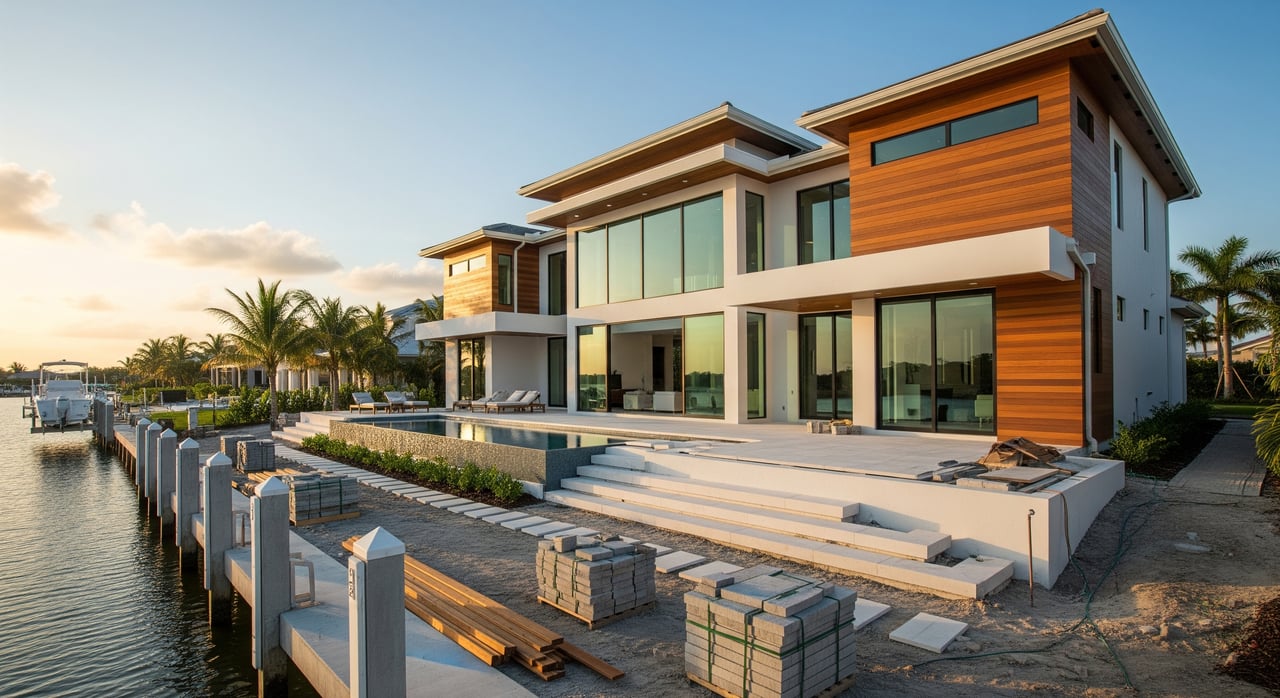
Construction usually follows this sequence: sitework and erosion control, footings and foundation, slab and framing, roof, rough utilities, insulation and energy compliance, drywall and finishes, then final systems testing and landscaping. City inspectors visit at defined stages such as footing, slab, framing, mechanical, plumbing, electrical, and final. Waterfront sites may have parallel inspections for seawalls or boat lifts.
Certificate of Occupancy
After you pass final inspections and utilities are verified, the City issues a Certificate of Occupancy or a temporary CO so you can move in. Utility meter activation and any escrowed items must be completed.
Permits you will need
- Building permit for structural and general plans review
- Trade permits for electrical, plumbing, and mechanical/HVAC
- Site development or grade and fill permit for drainage and erosion control
- Seawall or bulkhead permit for waterfront work, which can trigger state or federal approvals
- Tree removal or landscaping permits if required
- Stormwater management documentation when site work triggers it
- Utility connection permits and meter set confirmations
- Septic system permit if not on central sewer
What to submit with your application
- Completed permit application signed by the owner or authorized agent
- Stamped construction drawings, including site plan, floor plans, elevations, and structural details
- Boundary survey with legal description
- Soils or geotechnical report if required
- Energy code compliance documentation
- Truss or manufacturer shop drawings prior to framing inspection
- Contractor license, proof of insurance, or owner-builder affidavits when applicable
- Flood elevation information or a FEMA elevation certificate if required
Agencies and approvals in play
- City of Cape Coral Building Division and Permit Center for plan review, inspections, and COs
- Lee County Utilities for potable water and sewer availability, connections, and fees
- Florida Department of Health in Lee County for septic and potable water well permits
- Southwest Florida Water Management District for stormwater and certain water management permits
- Florida Department of Environmental Protection and the U.S. Army Corps of Engineers for mangroves, wetlands, dredge or fill, and navigable waters
- Florida DBPR for contractor licensing and verification
How long it takes
Plan prep and permitting
Plan preparation, including architect or engineer work and HOA review, often takes 2 to 12 weeks or more, depending on complexity and HOA cycles. The City’s initial plan review commonly runs 2 to 6 weeks for a complete residential package. If you need revisions or multiple review cycles, expect extra weeks. After approval, final permit issuance can take several days to a few weeks while fees are paid and any remaining items are cleared.
Construction timeline
Typical production homes on prepared sites take about 6 to 9 months to build. Custom homes, waterfront lots with seawalls, complex foundations, or extensive site prep can push timelines to 9 to 18 months or longer. Specialty elements like seawalls, dredging, elevated slabs, or advanced systems can add time.
Inspections and CO
Contractors schedule inspections through the City portal or by phone. Inspections usually occur within 1 to 5 business days, though peak seasons can slow things down. Final inspections, punch list completion, and utility activation can add days to a few weeks before you receive your CO.
What slows projects down
- Incomplete or non-compliant plan submittals that require multiple review cycles
- HOA approval delays or revision requests
- Utility availability or capacity constraints such as meter wait times and sewer tie-ins
- Environmental permitting for seawalls, mangroves, or wetlands that involve several agencies
- Contractor licensing, insurance, or registration issues that stall permit issuance
- Supply chain delays for trusses, windows, and doors and inspection scheduling during peak seasons
- Weather impacts, especially during hurricane season
How to prevent delays
- Schedule pre-application conversations with City staff and use the City’s checklists
- Complete HOA approvals before you submit to the City
- Hire local, Florida-licensed design pros and a builder who know Cape Coral codes and waterfront requirements
- Order long-lead items early and coordinate delivery windows
- Confirm water and sewer connections, meter availability, and fee estimates before you purchase a lot or finalize designs
Site realities: flood, wind, and water
Flood zones and elevation
Cape Coral includes many low-lying and canal-front areas. Verify your FEMA flood zone and the Base Flood Elevation. The Florida Building Code and local policy require minimum finished floor elevations above the BFE, and some areas may require additional freeboard. Your flood zone impacts foundation design, insurance needs, and whether you will need an elevation certificate.
Wind and hurricane design
Florida’s Building Code includes hurricane-resistant design criteria for wind loads. Your plans will address impact-rated glazing or shutters, roof tie-downs, and opening protection. Cape Coral enforces the applicable code edition and local amendments, especially within windborne debris regions.
Waterfront and seawalls
Waterfront lots often need seawall permits and may require repair or replacement before vertical construction begins. Work that affects state waters, mangrove trimming, or dredging can involve FDEP and the U.S. Army Corps. Each agency has its own timeline and potential mitigation requirements.
Utilities, impact fees, and assessments
- Many areas of Cape Coral are on Lee County Utilities; others use septic. Confirm early so your design fits your utility plan.
- Impact fees for transportation, parks, capital facilities, and utility connections are commonly due at permit issuance. Some neighborhoods or developments may have special assessments or impact agreements. Ask for estimates at the outset.
Your homeowner checklist
Pre-purchase
- Get a recent boundary survey
- Check FEMA flood maps and the property’s flood zone
- Request a utility availability letter from Lee County Utilities
- Ask about recorded restrictions, HOA rules, and any special assessments
Selecting professionals
- Choose Florida-licensed architects or engineers and a local licensed general contractor
- Verify contractor licenses and insurance through Florida DBPR
- Review references and recent similar projects, including waterfront experience if applicable
Permit submittal
- Site plan and sealed building plans
- Boundary survey
- Contractor license and insurance
- Soil report if required
- Energy compliance documentation
- Utility availability or sewer and water documentation
- HOA approval letter when applicable
Financing, draws, and after closing
Construction loans typically use draw schedules tied to inspection milestones. Ask your lender how inspections align with disbursements so your builder’s schedule stays on track. Clarify your builder’s warranty terms, including coverage length and what is covered. At closing, collect as-builts, manuals, warranties, and your Certificate of Occupancy.
Get local help
Building in Cape Coral is achievable when you have a clear plan and a local team. Whether you are choosing between lots, preparing for waterfront permitting, or coordinating timelines, local guidance can save you time and stress. If you are an investor or second-home buyer, integrated property management and short-term rental advisory can help you protect and optimize your investment after the build.
If you want a trusted local partner for lot selection, builder introductions, timeline planning, and long-term ownership support, connect with Pelican Vista Realty. We pair neighborhood expertise with white-glove service so you can build with confidence.
FAQs
How long does new construction take in Cape Coral?
- A typical production home takes about 6 to 9 months to build, while custom or waterfront homes can take 9 to 18 months or more. Plan review and permitting add several weeks before ground-breaking.
Who pulls the permits for a new Cape Coral home?
- Usually the licensed contractor or an owner-builder pulls permits. Confirm permit responsibility, submittal items, and fees in your construction contract.
Do I need flood insurance for a canal-front home in Cape Coral?
- If your property is in a FEMA Special Flood Hazard Area and you use a federally backed loan, flood insurance is required. Even outside those areas, many waterfront owners choose coverage based on risk.
What if my Cape Coral lot needs a seawall before building?
- Seawall permitting and construction can add weeks to months due to agency approvals and contractor schedules. Plan this in parallel with home design to limit delays.
What inspections will the City of Cape Coral require?
- Inspections typically include footing, slab, framing, mechanical, plumbing, electrical, and final. Waterfront projects may have parallel seawall or lift inspections.
When are impact and utility fees paid in Cape Coral?
- Impact and utility connection fees are commonly due at permit issuance. Confirm amounts and timing with the City and Lee County Utilities early in the process.