Buying land in Lehigh Acres can look simple at first glance. You see a lower price point, a lot that seems straightforward, and the appeal of building something new that fits your needs. But with vacant land and new construction, the details matter more than they do in a typical resale purchase. This guide will help you understand what makes Lehigh Acres different, what to verify before you buy, and how to plan your next steps with more confidence. Let’s dive in.
Why Lehigh Acres draws land buyers
Lehigh Acres stands out in Lee County because of its size and layout. Lee County describes it as a 96-square-mile, pre-platted community made up mostly of quarter-acre and half-acre single-family lots. That creates a very different buying experience than you might find in areas with tighter lot inventories or more built-out neighborhoods.
For many buyers, that setup supports a value-focused path into Southwest Florida. Zillow’s March 31, 2026 housing data puts Lehigh Acres’ typical home value at $284,161, compared with $334,686 in Cape Coral and $308,876 in Fort Myers. While those figures are home-value indicators rather than raw land prices, they help explain why Lehigh Acres is often seen as a lower-entry option in the region.
Lehigh Acres also has a long-term growth story that is tied to planning, not just price. Lee County’s community plan points to a future that balances residential neighborhoods with compatible commercial corridors and mixed-use centers. If you are thinking beyond today’s lot price, that broader planning context matters.
What lot sizes are common in Lehigh Acres?
In simple terms, most buyers will encounter standard residential homesites rather than large rural tracts. Official county planning materials describe Lehigh Acres as mostly a quarter-acre and half-acre single-family lot community. That is one of the clearest facts to keep in mind when you start your search.
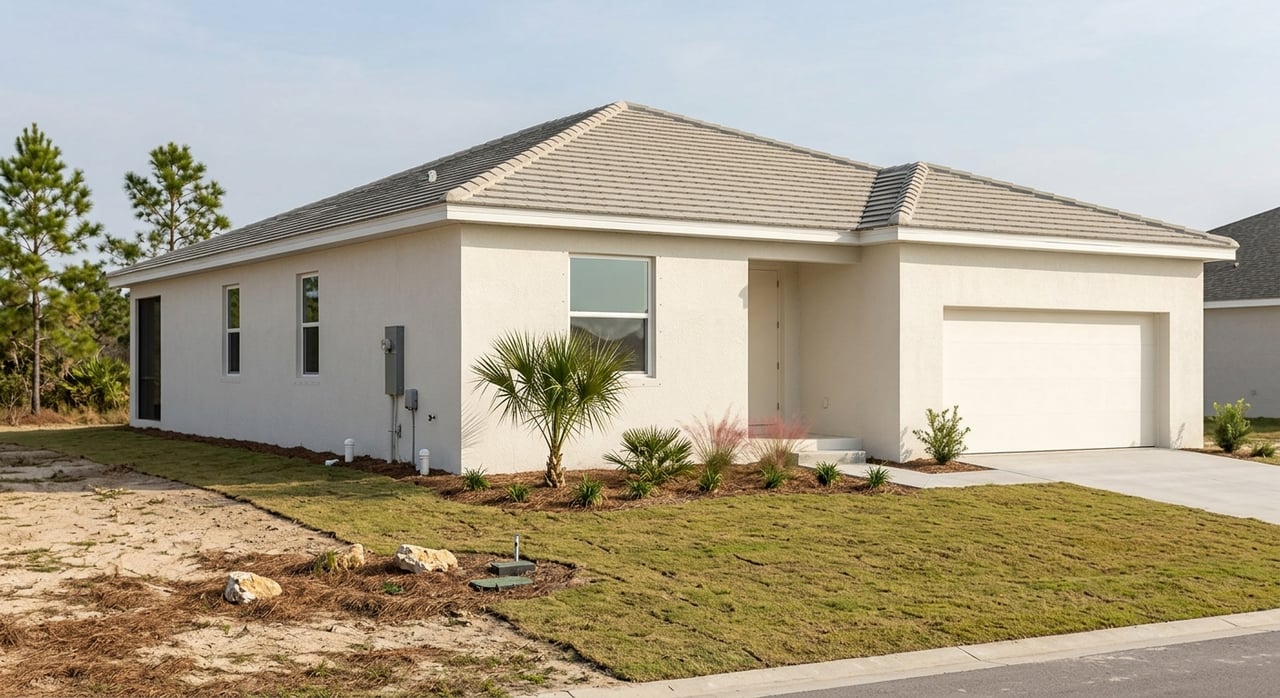
This lot pattern can be appealing if you want enough space for a typical single-family build without stepping into a much larger land purchase. It also helps explain why Lehigh Acres is often part of the conversation for buyers who want to build a new home with a more manageable entry point.
That said, every parcel still needs individual review. Lot dimensions, road access, utility options, and site conditions can vary from one street to the next. A lot that looks similar on paper may involve a very different building process once you dig into the details.
What can you build on a Lehigh Acres lot?
For many buyers, the baseline use is a single-family home. Lee County’s residential building guide says a residential construction permit is required for new construction, and the county’s new-primary-structure category includes single-family homes, two-family attached homes, duplexes, detached accessory apartments, and model homes.
That does not mean every parcel is a fit for every use. The type of structure you want to build, along with the parcel itself, can affect the approval path and the requirements you will need to meet.
For larger projects, Lee County says multiple-family residential projects, subdivisions, and several other development types must obtain a Development Order before site work begins and before a building permit is issued. The county also notes that duplex and attached-home projects can trigger additional driveway, landscaping, and irrigation requirements when they are not part of an active Development Order.
Utilities are the biggest land-buying checkpoint
If you are buying land in Lehigh Acres, utility verification should be one of your first steps. This is one of the biggest reasons vacant-land purchases need more diligence than resale homes.
Lee County Utilities says it does not serve Lehigh Acres. At the same time, FGUA publishes separate Lehigh Acres rates, fees, and system documents. That tells you an important fact right away: utility service in Lehigh Acres is handled outside the county utility system, and it is not uniform across the area.
In practical terms, you should not assume a lot has the same utility setup as another parcel a few streets away. You need to confirm what is available for that specific property before closing.
Public water and sewer
Some parcels may connect to public utility service through FGUA, but that availability is parcel-specific. If public service is available, buyers should still budget for connection and capacity costs.
FGUA’s current Lehigh Acres capacity-fee schedule lists single-family connection fees of $3,070 for water and $3,057 for wastewater. Those figures are a starting point only and do not include parcel-specific site work or other utility-related costs.
Well and septic
Many parts of Lehigh Acres still rely on septic systems. A Lee County wastewater management report notes that the area has many septic-served sections, and FGUA states that wastewater-service expansion and septic conversion are being studied in part of the Lee Boulevard area.
If a lot needs a private potable well, Lee County requires a signed Well Affidavit with the building permit application. The county also says the well permit must be obtained and finaled before a Certificate of Occupancy is issued.
If the property needs septic, the Florida Department of Health in Lee County handles septic permitting and inspections for unincorporated Lee County. For buyers, that means site-readiness is not just about the lot itself. It is also about which agencies and approvals your build will involve.
Permitting in Lehigh Acres: what to expect
Every new home build in Lehigh Acres starts with county permitting. Lee County requires a Residential Construction permit for new construction, and residential permit applications must include either a state-licensed contractor registered with Lee County or an owner-builder declaration of self-use.
A key point for buyers is that there is no one fixed approval timeline. Lee County says permit review time varies based on department workload. Because of that, your timeline will depend on more than just how quickly you choose a floor plan.
For a typical residential build, Lee County may require several supporting items, including:
- A recorded Notice of Commencement if construction is greater than $2,500
- An owner-signed Impact Letter for single-family residence and duplex projects
- A site fill grading plan if the final grade is more than 18 inches above the road crown or an adjacent developed lot, unless the parcel is in an active Development Order area
These are some of the reasons a vacant-land deal can move differently than a standard home purchase. You are not just buying property. You are buying into a process that may involve utility coordination, site prep, drainage review, inspections, and final occupancy approval.
What can slow down a new build?
Most delays are not about one big issue. They usually come from a chain of smaller items that need to be handled in the right order.
Common timeline factors include confirming utility availability, determining whether well or septic work is needed, reviewing drainage and fill requirements, and moving through permit and inspection steps. If the parcel has added complexity, the path from contract to construction can stretch longer than buyers first expect.
This does not mean building in Lehigh Acres is unusually difficult. It means planning matters. The more clearly you understand a lot’s conditions before closing, the fewer surprises you are likely to face later.
Budget beyond the lot price
When buyers look at land, the purchase price often gets the most attention. In reality, your all-in cost may be shaped just as much by what the site needs before and during construction.
At a minimum, buyers should account for:
- Building permit-related costs
- Utility connection or capacity fees where applicable
- Site preparation
- Well costs if public water is not available
- Septic costs if public sewer is not available
- Drainage or fill-related work if the parcel requires it
This is one reason Lehigh Acres can be attractive and still require careful budgeting. A lower entry point on paper does not remove the need for parcel-specific due diligence.
Who Lehigh Acres may fit best
Lehigh Acres can be a strong option if you want a standard residential lot, a new-construction path, or a more budget-conscious way to enter the Southwest Florida market. It may also appeal to buyers who want more say in home design rather than choosing only from existing resale inventory.
The best fit often comes down to your timeline, flexibility, and comfort with a more detailed pre-closing process. If you want a move-in-ready home fast, land may not be the simplest path. But if you are open to planning ahead and verifying the details, Lehigh Acres can offer real opportunity.
A smart buyer checklist
Before you buy a lot in Lehigh Acres, make sure you confirm the basics for that exact parcel:
- Lot size and general build suitability
- Whether your intended home type fits county requirements
- Public water and sewer availability, if any
- Whether a well or septic system will be needed
- Estimated utility connection or capacity fees
- Any site fill, grading, or drainage considerations
- Permit path and likely review steps
- Contractor or owner-builder plan for the permit application
A clear checklist can save time, money, and frustration. It also helps you compare lots more accurately when two properties seem similar at first glance.
If you are considering land or a new build in Lehigh Acres, working with a local team that understands vacant lots, permitting steps, and Southwest Florida buying patterns can make the process much easier to navigate. When you are ready to explore your options, connect with Pelican Vista Realty for thoughtful, hands-on guidance.
FAQs
What lot sizes are common for land in Lehigh Acres?
- Lee County describes Lehigh Acres as mostly a quarter-acre and half-acre single-family lot community.
What home types can buyers build on Lehigh Acres land?
- Lee County’s residential permit categories include single-family homes, two-family attached homes, duplexes, detached accessory apartments, and model homes, but the parcel and project type affect the approval path.
What utility service should buyers verify for Lehigh Acres lots?
- Buyers should verify the specific parcel because Lee County Utilities does not serve Lehigh Acres, public utility service is not uniform across the area, and some properties may rely on FGUA service, wells, septic, or a mix of those.
What permits are required for new construction in Lehigh Acres?
- Lee County requires a Residential Construction permit for new construction, and applications must include either a state-licensed contractor registered with Lee County or an owner-builder declaration of self-use.
What extra costs should buyers budget for Lehigh Acres land?
- In addition to the lot price, buyers should plan for permit-related costs, utility connection or capacity fees, site prep, and any needed well, septic, drainage, or fill work.
How long does new construction approval take in Lehigh Acres?
- Lee County does not publish one fixed review timeline, and says review time varies based on department workload and the details of the parcel and project.